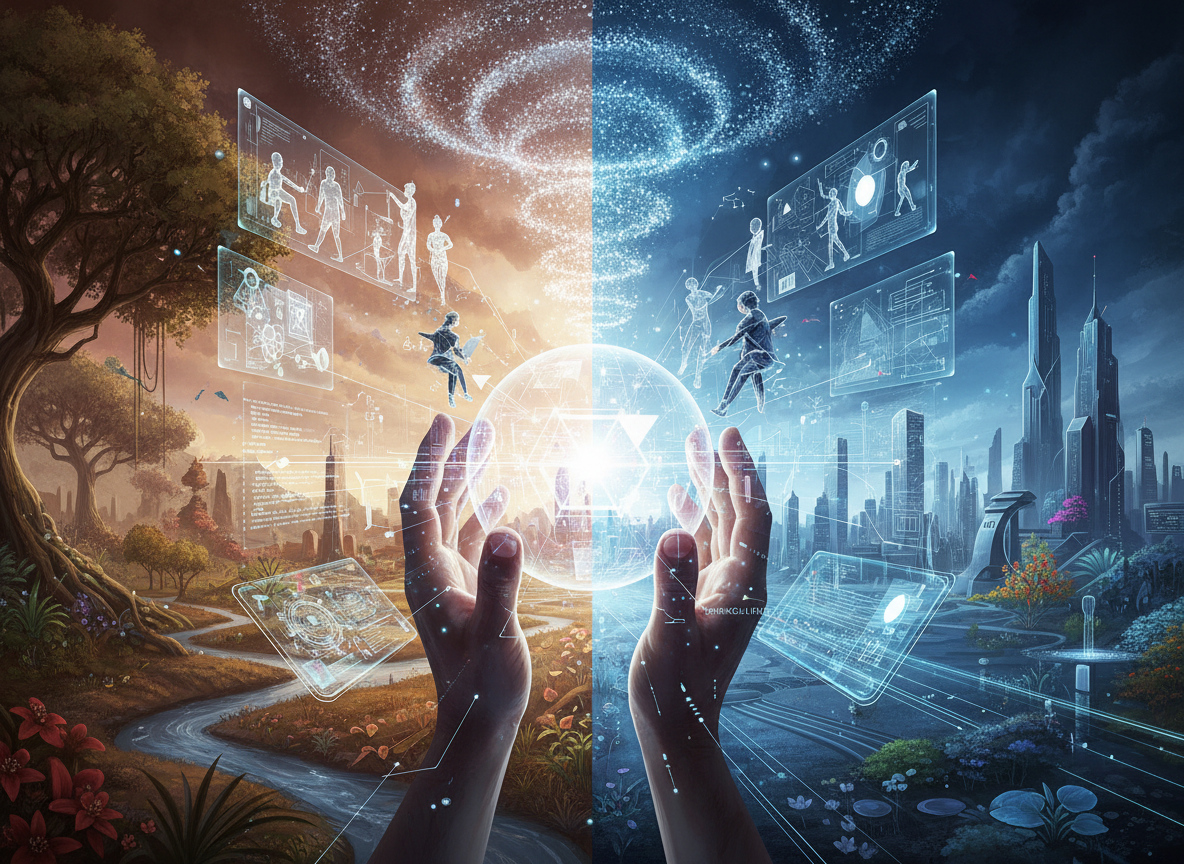
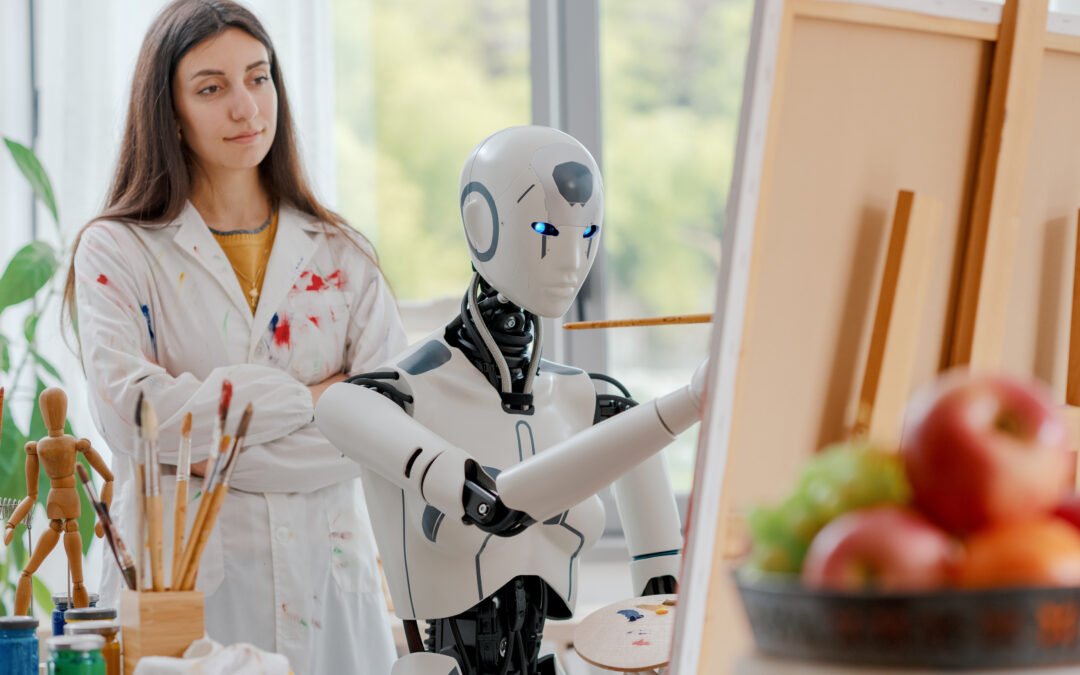
Artificial intelligence has moved rapidly from a supporting role into the spotlight of creative industries. AI can now generate images, write copy, compose music, and design layouts in seconds—tasks that once took trained professionals years to master. For businesses and individuals alike, this raises an uncomfortable question: Do we still need human creatives?
The answer depends on what we value in creativity—and what we’re willing to lose.
This isn’t a story of humans versus machines in a zero-sum battle. It’s a story of capability, intention, quality, and responsibility.
The Appeal of AI in Creative Work
AI’s rise in creative fields is not accidental. It offers clear, practical advantages:
Speed and Scale
AI tools can produce dozens of design variations, articles, or concepts in minutes. For fast-moving markets and tight deadlines, this is undeniably useful.
Cost Efficiency
For startups or small teams, AI can seem like a budget-friendly alternative to hiring designers, writers, or artists—especially for repetitive or low-stakes tasks.
Accessibility
AI lowers the barrier to entry. Someone with no formal training can now generate visuals, draft copy, or prototype ideas quickly.
Consistency
AI does not get tired, emotionally burned out, or distracted. It can produce consistent output around the clock.
These strengths explain why AI adoption feels inevitable. But efficiency is not the same as excellence.
The Hidden Costs of AI-Generated Creativity
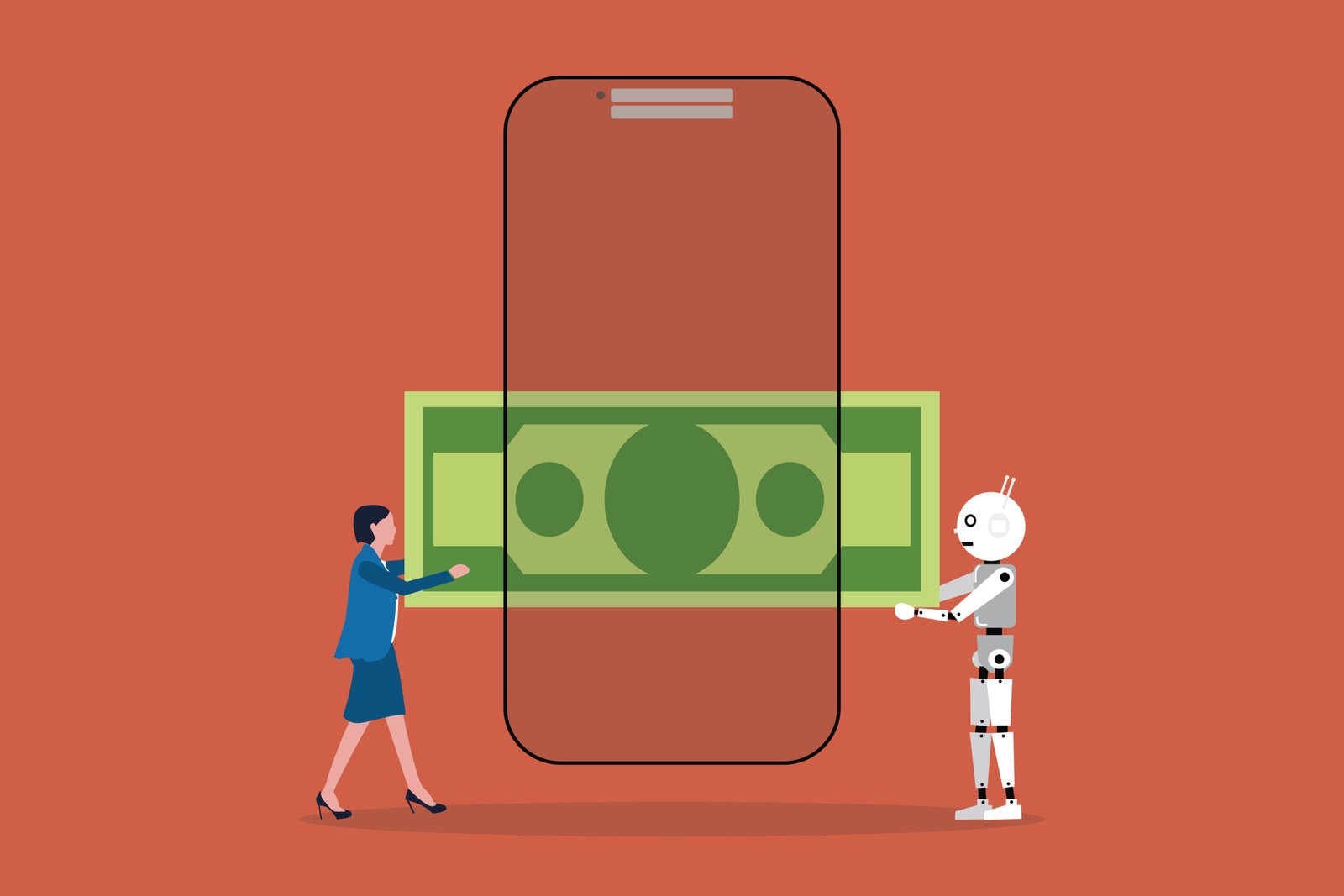
While AI can replicate patterns, it does not understand meaning. This distinction matters deeply in creative work.
Lack of Intent and Judgment
Creativity is not just output—it’s decision-making. Skilled humans understand why something should exist, not just how to produce it. AI lacks context, lived experience, cultural sensitivity, and moral judgment.
Homogenization of Style
AI is trained on existing work. Over time, this leads to safe, average, and repetitive aesthetics. What looks impressive today often feels generic tomorrow.
No Accountability
When an AI-generated campaign fails, offends, or misleads—who is responsible? Human creatives stand behind their work. AI does not.
Shallow Understanding of Audiences
Great designers and writers read between the lines. They sense nuance, emotion, irony, and subtext. AI can mimic tone but cannot truly empathize.
Erosion of Craft
When speed replaces skill, the long-term cost is cultural. Craft, originality, and deep expertise are hard-won—and easy to devalue once lost.
The Enduring Value of Skilled Human Creatives
Human designers, writers, and artists bring qualities that cannot be automated without losing something essential.
Original Thinking
Humans don’t just remix the past—they challenge it. True innovation often breaks rules before it defines new ones.
Strategic Creativity
Experienced creatives don’t just “make things look good.” They solve problems, align with business goals, and anticipate long-term impact.
Emotional Intelligence
Humans understand contradiction, ambiguity, humor, pain, and joy. These elements form the core of memorable creative work.
Cultural Awareness
Design and language live within social, political, and historical contexts. Humans navigate these responsibly; AI approximates them.
Ethical Responsibility
Human creatives can say no. They can refuse harmful narratives, misleading visuals, or exploitative messaging. AI cannot make moral choices.
Hiring skilled humans is not nostalgia—it’s an investment in quality, trust, and long-term value.
The Real Risk: Replacing Thinking with Output
The greatest danger isn’t that AI will replace creatives—it’s that organizations will confuse volume with value.
Cheap, fast content may fill channels, but it rarely builds brands, loyalty, or cultural relevance. Over-reliance on AI risks turning creativity into a commodity rather than a craft.
The question shouldn’t be “Can AI do this?”
It should be “Should it?”
Toward a More Balanced Future
Despite legitimate concerns, rejecting AI outright is neither realistic nor necessary.
Used carefully, AI can enhance creative work rather than undermine it:
-
Assisting with research and ideation
-
Speeding up drafts and variations
-
Automating repetitive production tasks
-
Supporting—not replacing—human judgment
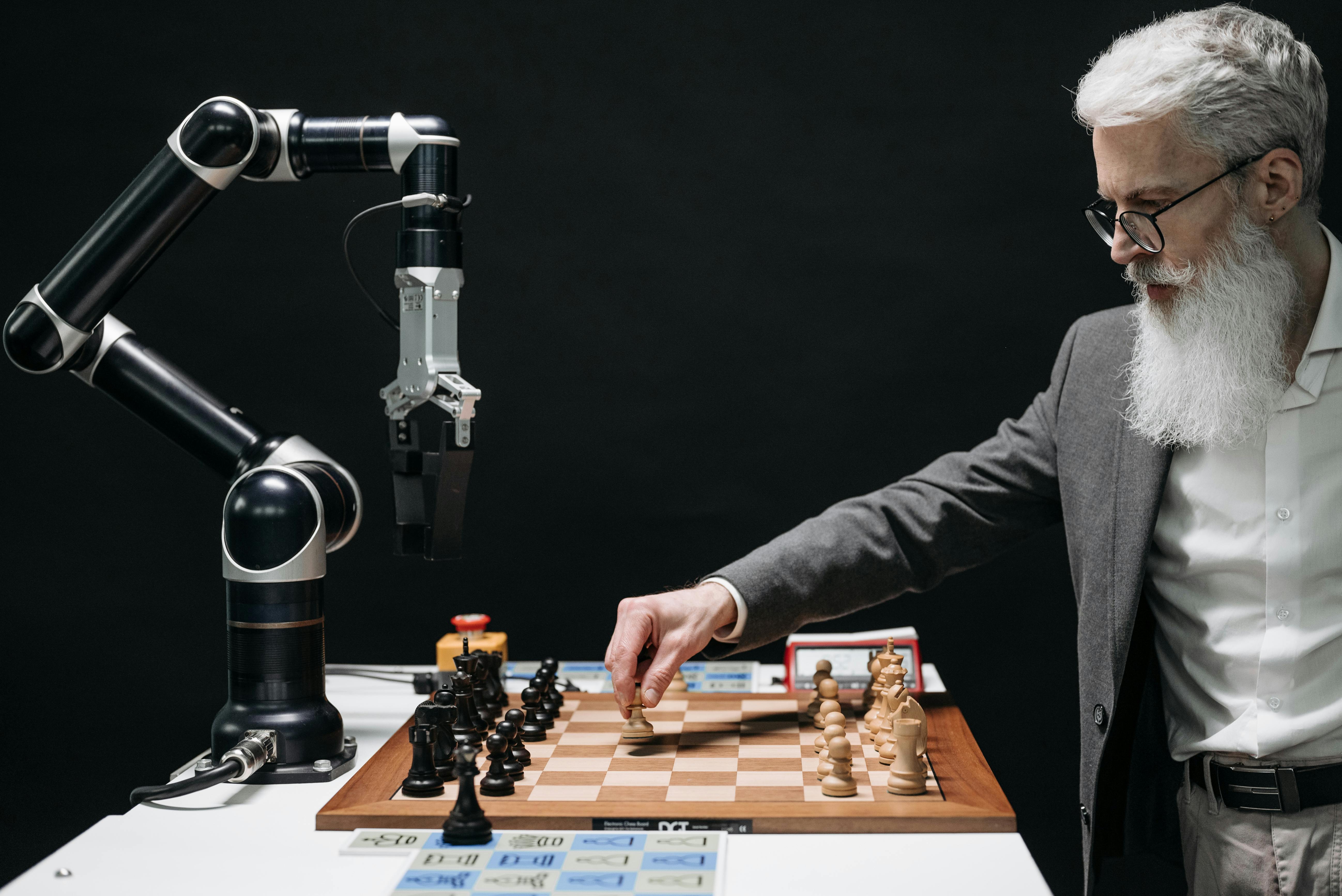
The healthiest model is not substitution, but collaboration. AI as a tool. Humans as decision-makers

Questioning the Narrative of Inevitability
The rise of AI in creative fields is often framed as unstoppable. But technology does not determine values—people do.
We can choose to prioritize:
-
Quality over speed
-
Meaning over volume
-
Craft over convenience
The future of creativity does not have to be fully automated to be innovative.
Final Thoughts
AI technologies are powerful, impressive, and here to stay. But creativity is not just about producing content—it’s about understanding, intention, and responsibility.
Skilled human designers, writers, and artists remain irreplaceable where originality, empathy, and judgment matter most. AI can support creative work, but it should not define it.
The real opportunity lies not in choosing one over the other, but in using both wisely—preserving human creativity while harnessing technology with care, restraint, and purpose.